The taste of Mewar begins at the table
Udaipur is often remembered for its lakes and palaces, but many travellers leave talking about the food. Mewari cooking grew out of a dry land where ingredients had to last, travel well, and feed people through long days. That is why so many classic dishes use gram flour, ghee, lentils, dried beans, and slow cooking. The result is food that is rich, earthy, and comforting.
Think of it like the city's architecture: simple materials, handled with patience, turned into something grand.
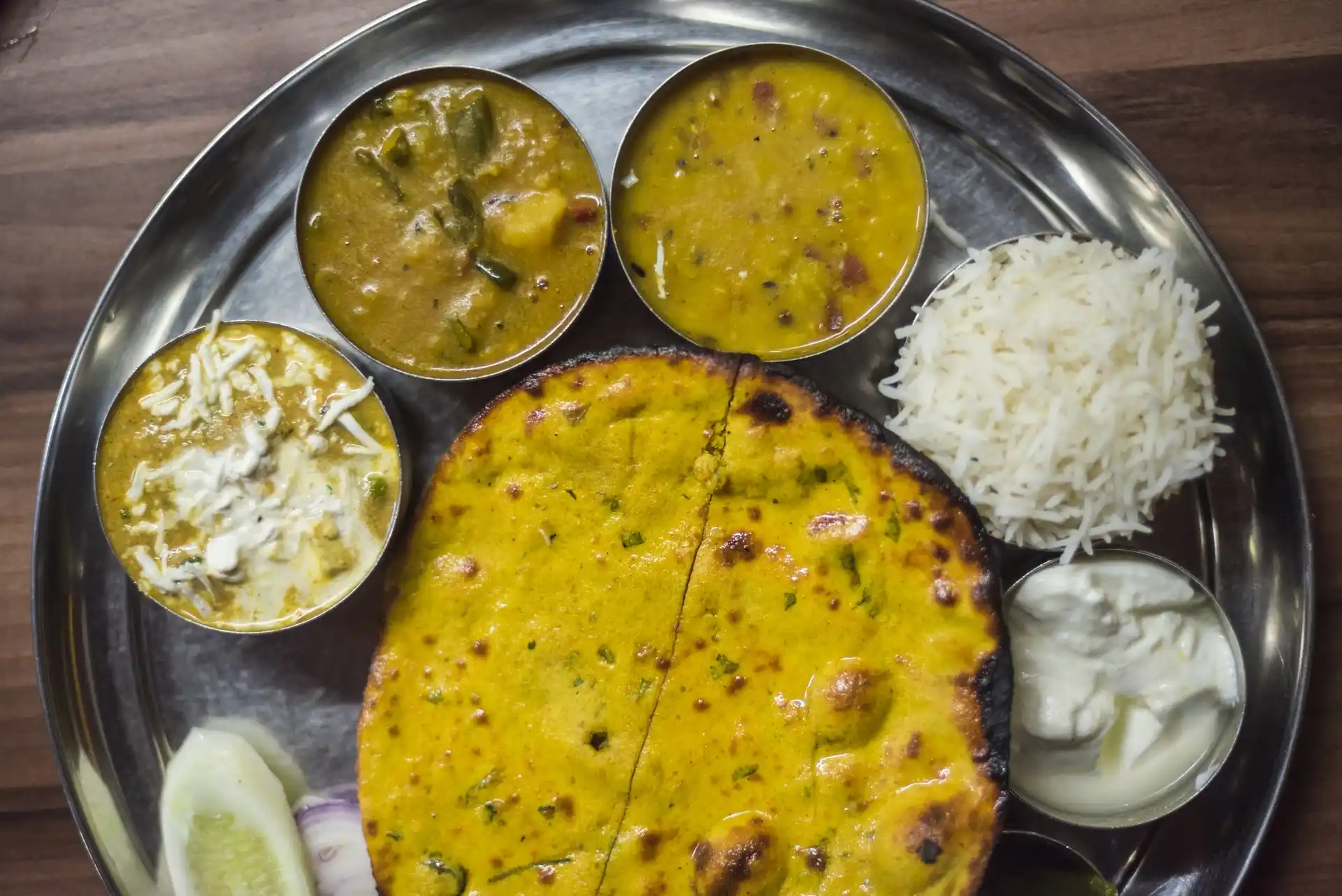
Dal baati churma: the dish you cannot skip
If Udaipur had one signature plate, this would be it. Baati are hard wheat rolls baked over coals or in an oven, then broken open and soaked in ghee. They are served with spiced dal (usually a mix of lentils) and churma, a sweet, crumbly mix of crushed baati, ghee, and jaggery or sugar.
The best way to eat it is the local way: crush the baati, pour dal over it, and take a little churma between bites. Sweet, salty, and spicy all at once.
Other Mewari dishes worth ordering
- Gatte ki sabzi: steamed gram-flour dumplings simmered in a tangy yoghurt curry.
- Ker sangri: a desert dish of dried berries and beans, sour, spicy, and unlike anything else in India.
- Papad ki sabzi: papad cooked in a spiced yoghurt gravy, a classic example of resourceful Rajasthani cooking.
- Bajre ki roti: millet flatbread, best with garlic chutney and white butter in winter.
- Laal maas: for non-vegetarians, a fiery mutton curry coloured by Mathania chillies.
If you want to try several at once, order a Rajasthani thali. Many restaurants in the Old City and around the lakes serve unlimited thalis that rotate through dals, sabzis, breads, rice, and sweets.
Street food mornings and evenings
Udaipur's day starts with something fried. Pyaaz kachori and dal kachori are morning staples, served hot with tamarind and mint chutney. Pair them with poha, a light flattened-rice breakfast, and you have the local way to begin a day of sightseeing.
By evening, the stalls switch to mirchi bada (large chillies stuffed with spiced potato, dipped in batter and fried), samosas, chaat, and dabeli. The areas around Surajpole, Chetak Circle, and the Fateh Sagar promenade are popular for evening snacking.
Sweets that end every meal
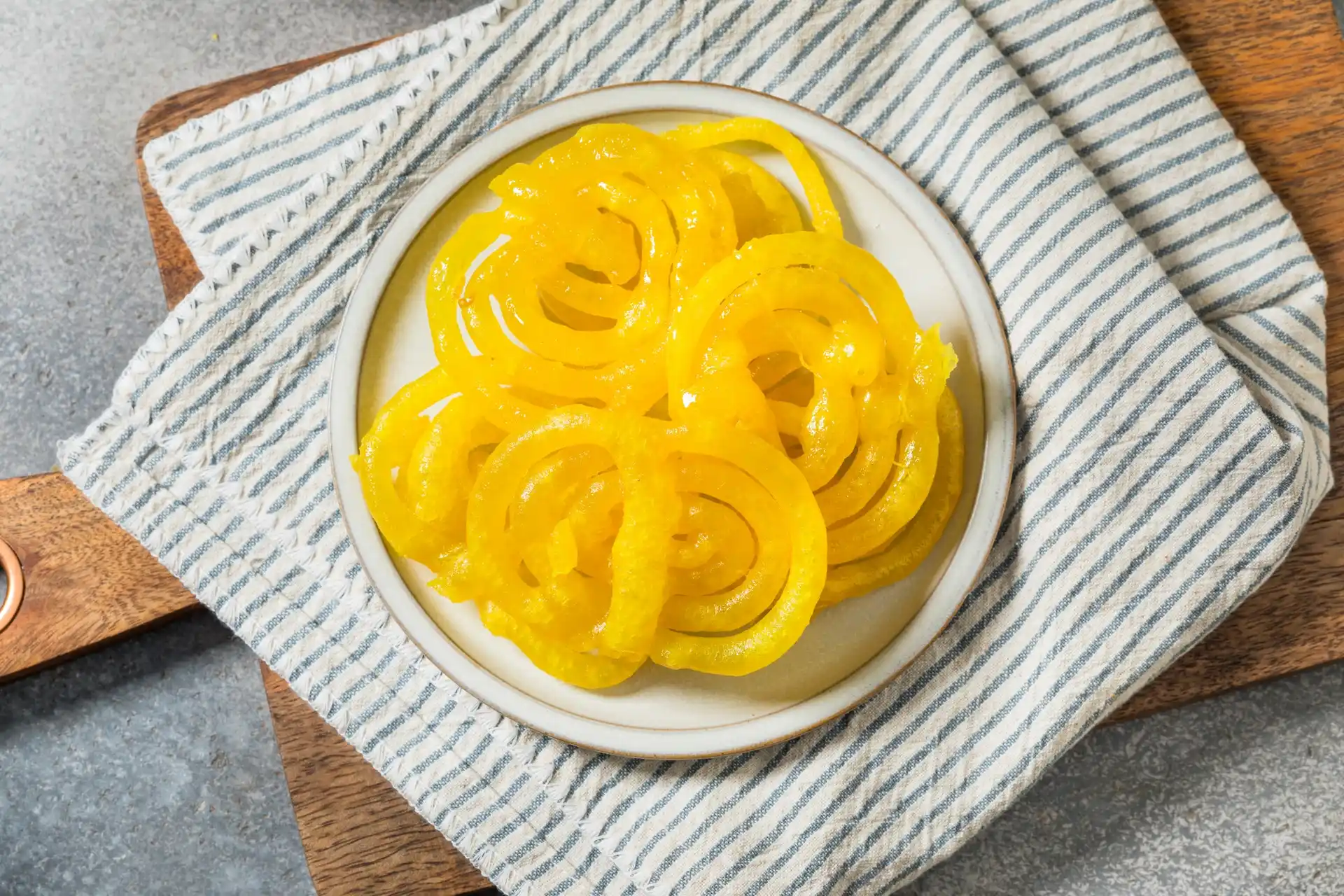
- Jalebi: crisp spirals soaked in sugar syrup, best eaten straight from the pan. Many locals eat it with rabri or even kachori.
- Malpua: soft, syrupy pancakes, especially popular during festivals.
- Ghevar: a honeycomb-like disc of fried batter soaked in syrup, made mostly around Teej and the monsoon season.
- Mawa kachori and kalakand: rich milk-based sweets found in almost every mithai shop.
Chai with a view
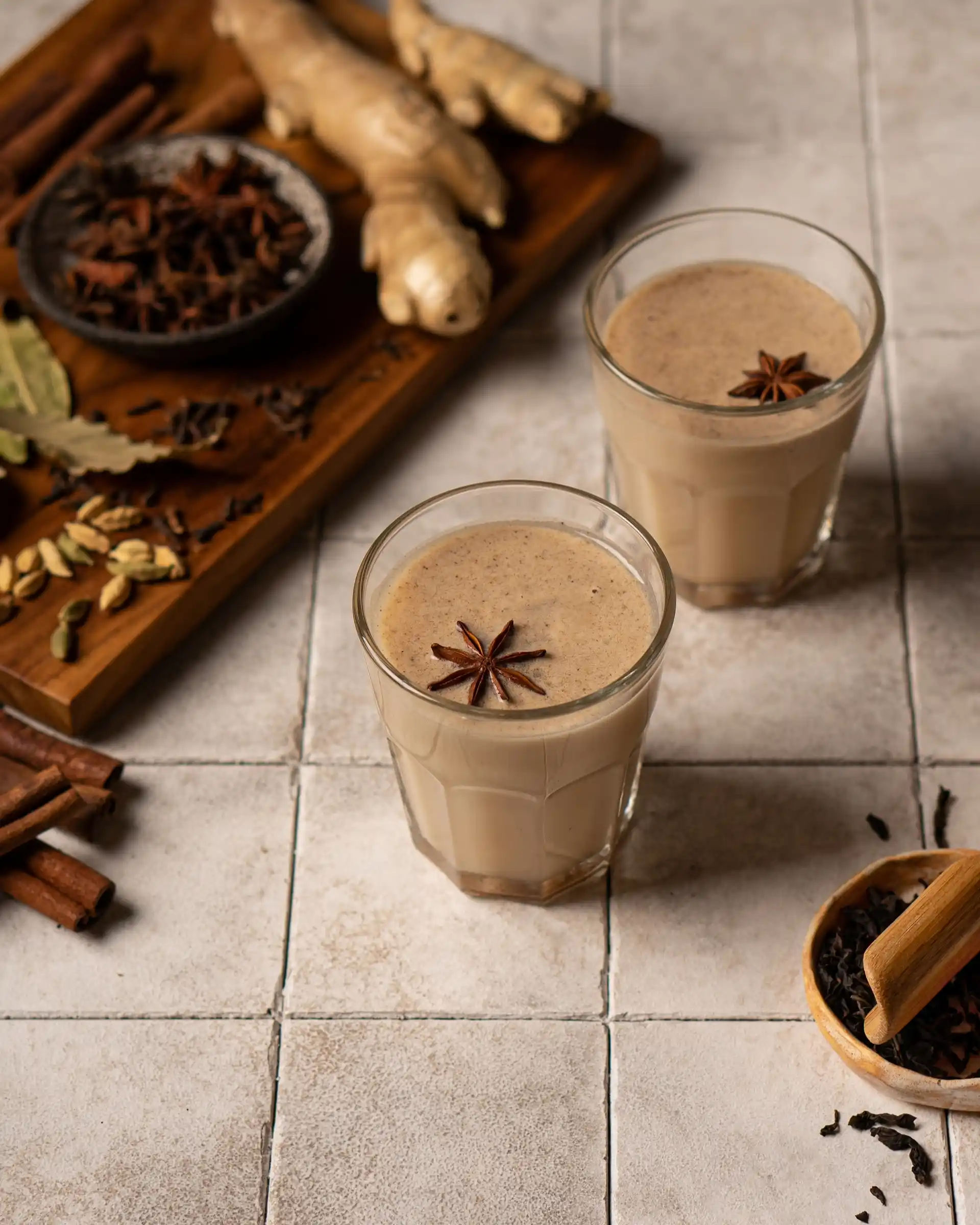
No food trip in Udaipur is complete without a cup of masala chai by the water. Kulhad chai at Fateh Sagar, rooftop tea overlooking Lake Pichola, or a quick cutting chai in an Old City lane: the setting changes, but the ritual stays the same. It is the city's way of telling you to slow down.
Tips for eating well in Udaipur
- Go early for kachori: the best shops often sell out by late morning.
- Ask for less ghee if you are not used to rich food; most places will happily adjust.
- Try a thali once: it is the easiest way to sample many Mewari dishes in one meal.
- Drink bottled or filtered water and choose busy stalls where food is cooked fresh.
- Leave room for sweets: in Udaipur, dessert is not optional.
Final thought
Udaipur's food carries the same spirit as its forts and lakes: resilience turned into generosity. Every plate of dal baati or bowl of gatte is a small lesson in how Mewar learned to live well with little. Come hungry, eat slowly, and let the city feed you.