Four places that complete the royal story
Most first-time visitors spend their time at City Palace and the lakes, and for good reason. But Udaipur's royal story spreads across the city: a palace on a hilltop built to watch the clouds, a garden made for the queen's companions, an island palace floating on Pichola, and a haveli that comes alive with folk music every evening. Together, they show how the rulers of Mewar lived, celebrated, and rested.
Sajjangarh (Monsoon Palace): where the clouds were watched
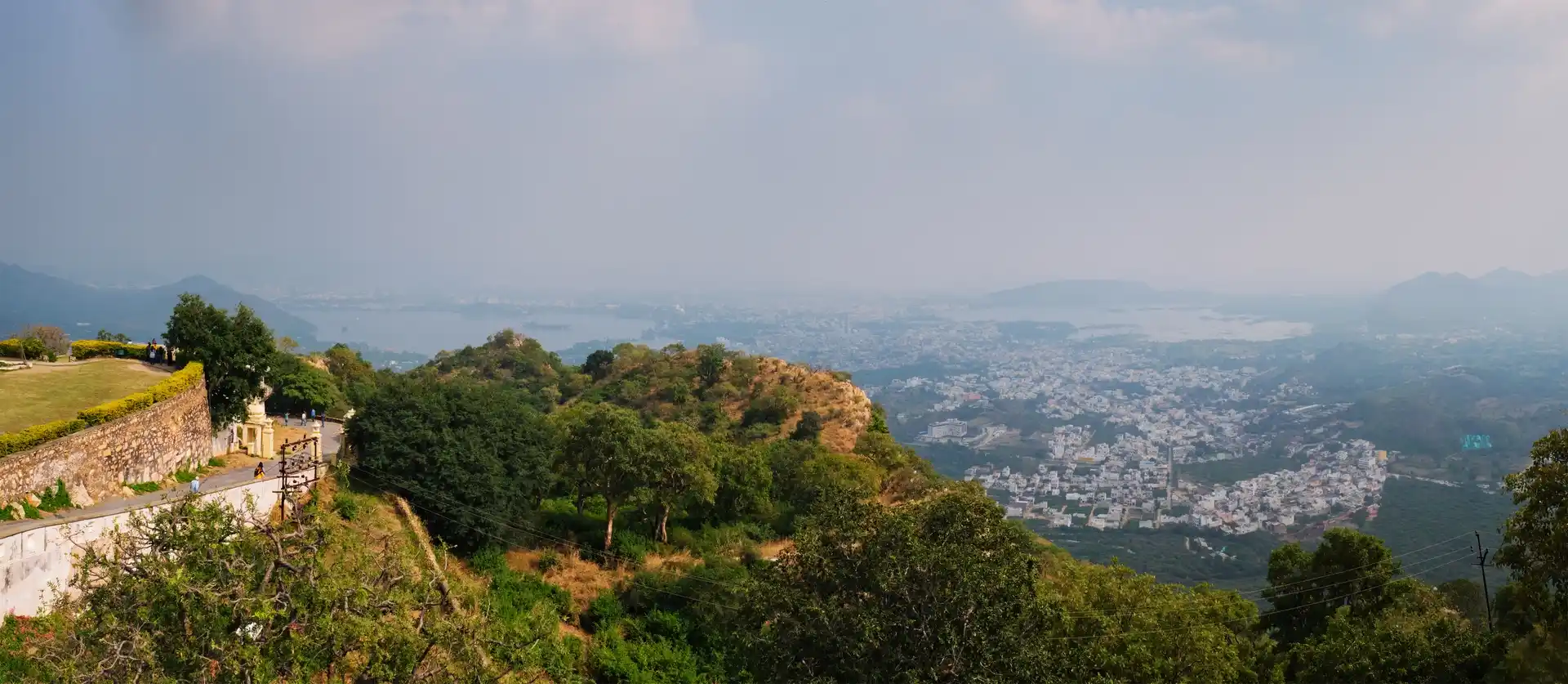
Perched on a hill in the Aravallis, Sajjangarh was built in the 1880s by Maharana Sajjan Singh. It was planned as a place to watch the monsoon clouds roll in over the city, which is how it got its popular name, the Monsoon Palace.
Today, the real draw is the view. From the top, Udaipur spreads below like a map: Lake Pichola, Fateh Sagar, the City Palace, and the hills beyond. Sunset here is one of the most memorable sights in Rajasthan. The palace sits inside the Sajjangarh Wildlife Sanctuary, and the road up winds through dry forest.
- Best time: an hour before sunset
- Tip: vehicles to the top run from the sanctuary gate; carry a light layer as it gets windy
Jag Mandir: the island palace on Lake Pichola
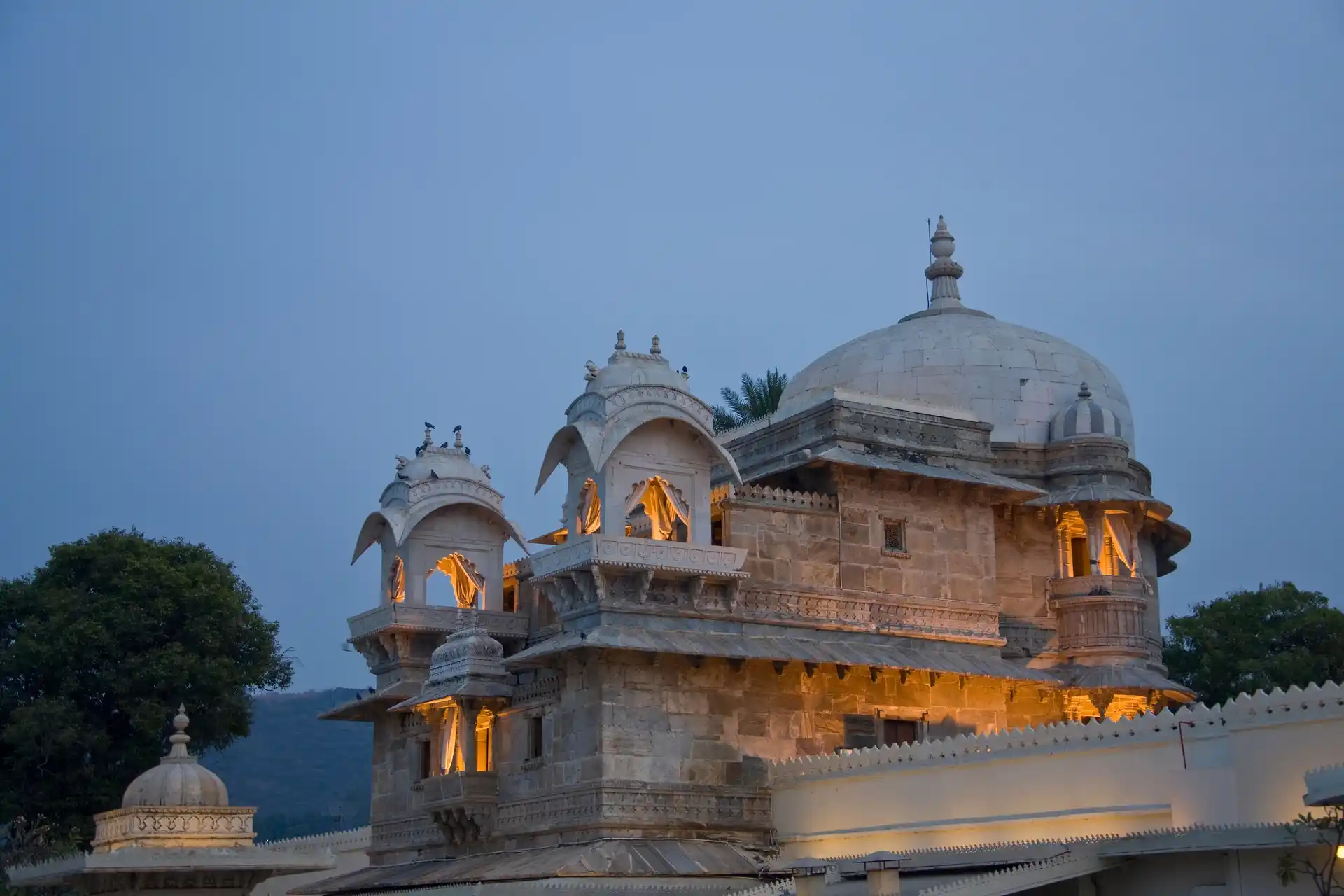
Rising from the southern part of Lake Pichola, Jag Mandir is often called the "Lake Garden Palace." Its construction began under Maharana Karan Singh and was completed by Maharana Jagat Singh in the 17th century. Rows of carved stone elephants appear to guard the island, as if they are standing in the water.
The island is reached by boat, usually as part of a Lake Pichola cruise. Walking through its courtyards, gardens, and pavilions, with the City Palace across the water, is one of the most peaceful experiences in Udaipur.
Saheliyon ki Bari: the Garden of Maidens
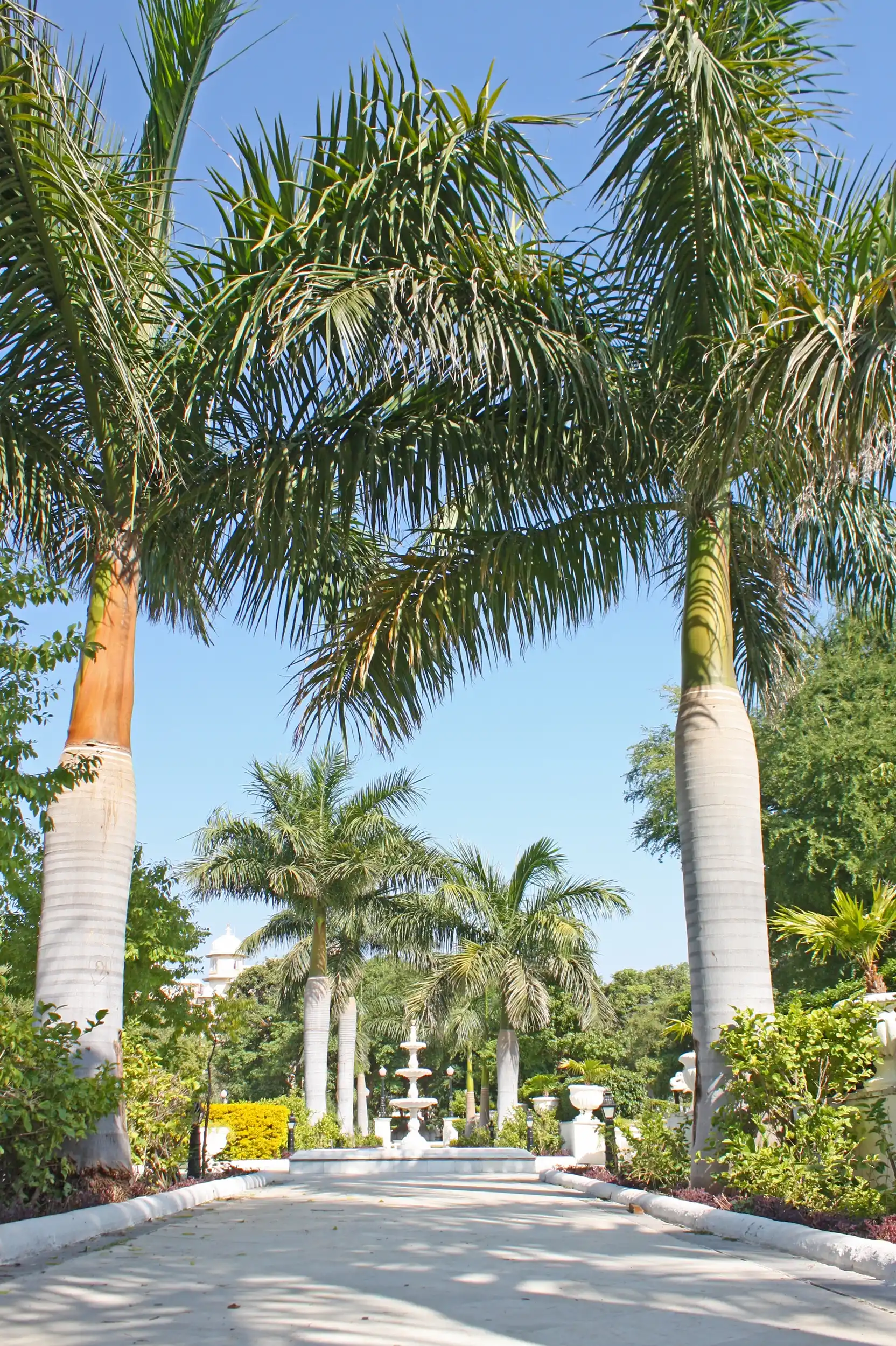
Built in the 18th century under Maharana Sangram Singh II, Saheliyon ki Bari was designed as a pleasure garden for the royal ladies and their companions. It is known for its fountains, lotus pools, marble elephants, kiosks, and shaded lawns.
It is a calm, green break from sightseeing and a favourite with families and photographers. Many of the fountains are fed by water from Fateh Sagar, which is only a short drive away.
- Best time: morning, when it is cooler and quieter
- Pair it with: Fateh Sagar Lake and the Moti Magri memorial of Maharana Pratap
Bagore ki Haveli: an evening with Rajasthani folk culture
Right on Gangaur Ghat, Bagore ki Haveli was built in the 18th century by Amar Chand Badwa, a prime minister of Mewar. Its many rooms, courtyards, mirror work, and balconies now house a museum of royal costumes, household objects, and art.
The haveli is best known for its evening Dharohar folk dance show. Performers present traditional Rajasthani dances, including the famous one where a dancer balances a stack of pots on her head. It is lively, colourful, and a perfect way to end a day in the Old City.
- Tip: arrive early for the show to get a good seat, especially in peak season
How to fit them into your trip
- Morning: Saheliyon ki Bari and Fateh Sagar
- Afternoon: Lake Pichola boat ride with a stop at Jag Mandir
- Sunset: Sajjangarh Monsoon Palace
- Evening: Dharohar show at Bagore ki Haveli
Final thought
City Palace shows you the power of Mewar. These four places show you its leisure, its love of water and gardens, and its music. Leave room for them, and Udaipur will feel complete.